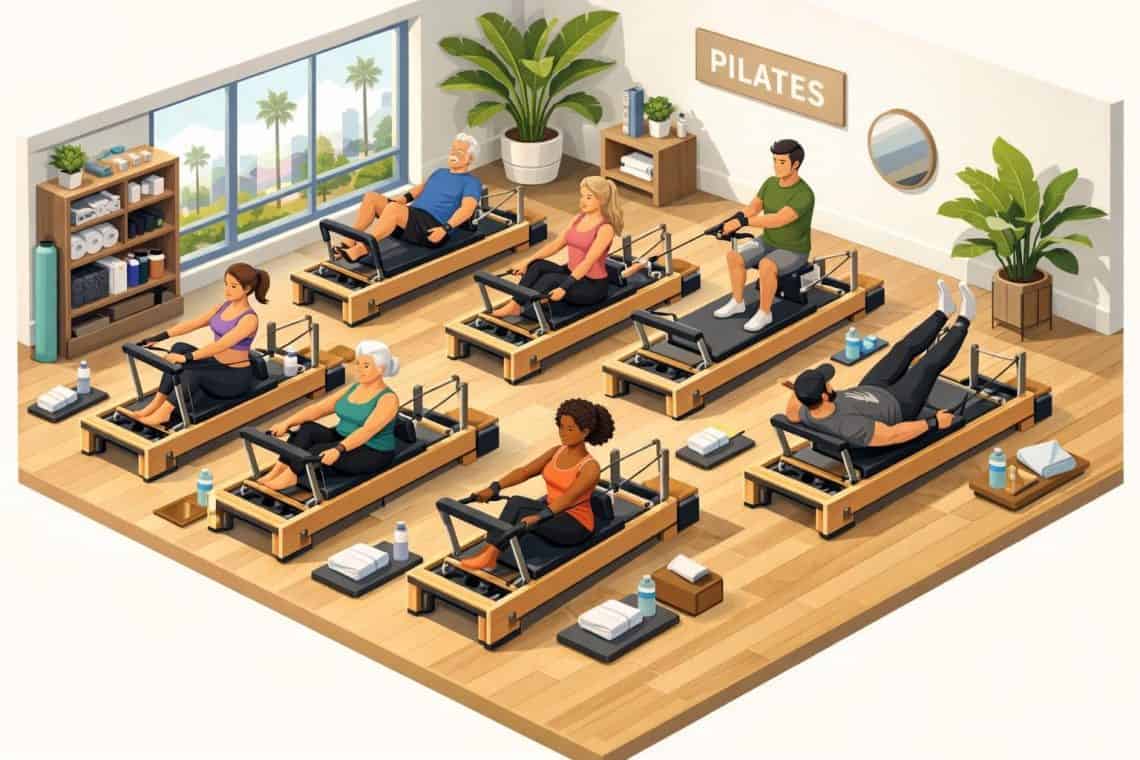
What is LA Pilates Reformer Pilates?
LA Pilates Reformer Pilates refers to the popular studio-style reformer classes you find across Los Angeles, taught on the sliding carriage apparatus called the reformer. It focuses on controlled movement, breathing and resistance to build strength, balance and mobility — not just aesthetics. The Pilates Method Alliance sets many of the training standards that reputable studios follow (Pilates Method Alliance, 2026), and the same approach is increasingly relevant for clients in Malaysia who want structured, skill-based training.
For readers comparing options, start with LA Pilates Reformer Pilates to see how a modern reformer format is positioned for group training.
Top Myths About Reformer Pilates in LA
Myth 1: It’s only for dancers and the already-fit
Reality: Reformer Pilates is scalable. In most LA studios instructors can change spring tension and provide modifications so beginners, older adults and people rehabbing injuries can join safely. You don’t need a dance background to get strong and coordinated.
Myth 2: Reformer Pilates is just about getting skinny — not strength
Reality: While reformer classes can help tone, they’re primarily about functional strength, core control and joint stability. Properly programmed classes challenge endurance and muscular control, not just appearance. If you want a broader view of class options, the pilates reformer format is a practical starting point.
Myth 3: You must be flexible before you start
Reality: Flexibility is an outcome, not a prerequisite. The reformer helps you gradually increase range of motion with guided resistance, so many people become more flexible after consistent practice.
Myth 4: LA Pilates is trendy and not a serious workout
Reality: Some studios emphasise boutique culture, but many LA reformer classes are evidence-informed and taught by certified instructors. The work can be subtle yet very demanding — great for improving movement quality over time (Journal of Physiotherapy, 2015).
Benefits That Actually Improve Your Skill
When your goal is to improve skill — whether that’s better posture, stronger core, or smoother movement in sport — reformer Pilates delivers specific benefits: improved core stability, enhanced proprioception, balanced strength across muscles, and refined motor control. These changes translate to better athletic skill and everyday movement.
Studies show Pilates can help reduce chronic low-back pain and improve function, supporting its role in rehab and performance work (Journal of Physiotherapy, 2015). Practical benefits like improved balance and movement endurance are also commonly reported by fitness pros (American Council on Exercise).
What to Expect in an LA Reformer Class and How to Progress
Before class: prep so you get the most out of it
Wear fitted, breathable clothes and socks with grip. Book a beginner-friendly session if it’s your first time and arrive 10–15 minutes early so the instructor can ask about any injuries and set up the reformer for you. If you need support before booking, use Contact Us.
During class: cues, tempo and attention to detail
Expect precise cueing about breath, alignment and tempo. The reformer’s springs provide resistance and assistance — listen to the instructor, start lighter and focus on quality reps rather than speed. Good form now means faster skill gains later.
How to progress: practical tips to improve your skill
Be consistent — aim for 2–3 classes a week if you want real gains. Track small wins: longer holds, smoother transitions, and heavier spring settings. Ask your instructor for progressive variations and occasional one-on-one technique checks to accelerate improvement.
Choosing the Right LA Studio and Staying Safe
Picking a studio: what to look for
Look for certified instructors, reasonable class sizes, and well-maintained reformers. A studio that offers trial classes or a beginner track is ideal — it shows they know how to onboard newcomers properly. Reviews and word-of-mouth from other clients can help you separate hype from quality.
Safety and injury considerations
Always disclose past injuries so instructors can modify exercises. Start conservatively with spring tension and range of motion; soreness is fine but sharp pain is not. If you have a medical condition, consult your healthcare provider before starting, and work with instructors who understand rehab principles (Pilates Method Alliance).
For a light, unrelated reference point on seasonal planning, see public holidays when coordinating your training schedule.